
Case studies · Creator story
He only paid once the leaks dried up
A fan told a creator he’d been watching her paid content on leak sites. He only started paying when her takedown service cut the leaks. Here is what happened, mostly in her words, and what it shows about leaks.
At a glance
- Creator: Lila (@Shh_itz_Lila), who shared this story publicly and agreed to it being used here.
- What happened: a subscriber said he’d found her on Reddit, then watched her paywalled content on leak sites instead of paying.
- What changed: once a takedown service cut her leaks “by a lot”, he started paying.
- Where it got stuck: when she reported him, the message she needed as proof disappeared before she could save it.
What happened
Lila posted about a subscriber she had recently blocked:
“I had one guy not long ago said he found me originally on Reddit but would only watch my paywalled content on leak sites. I think he even admitted to distributing some and had a big folder of my leaks. He only started actually paying when I got a DMCA service which reduced my leaks by a lot.”
She didn’t trust him and felt uncomfortable having him as a subscriber, so she blocked him. She says he offered to make it up to her with $10, and still wanted something in return.
The conversation
These are the screenshots Lila shared publicly. His name, the leak site and an image he sent have been removed.
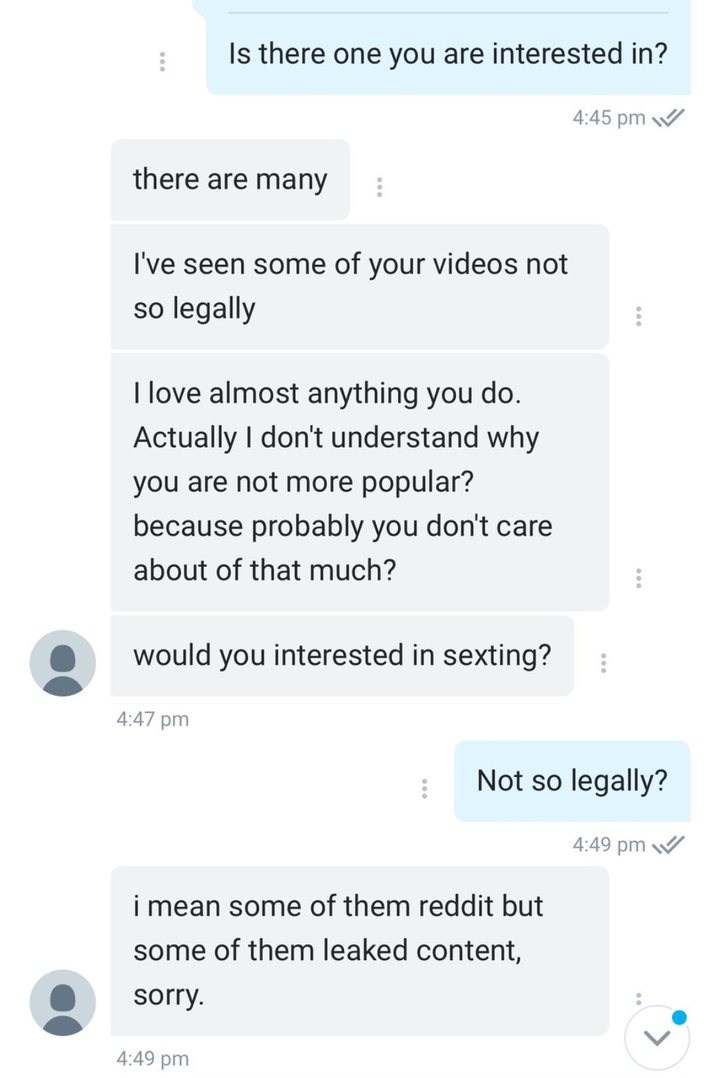
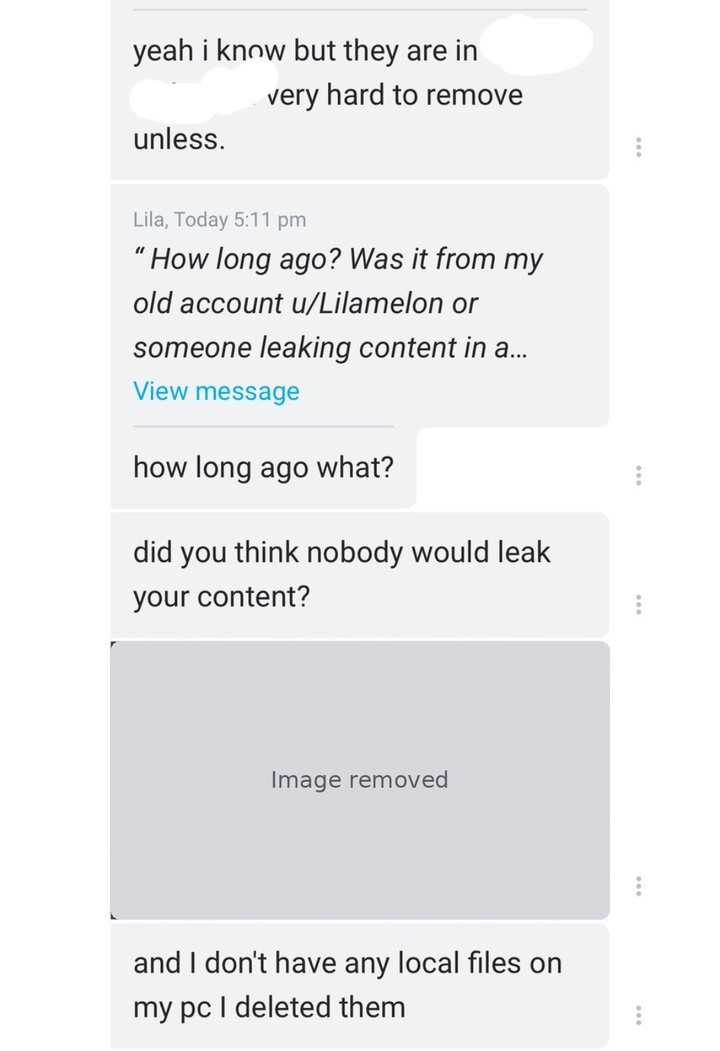
Screenshots: Lila, shared on X. Redactions of the leak site are hers; the fan’s name and image were removed by us.
What changed
Nothing about her content changed. What changed was how easy it was to get for free. While the leaks were easy to find, he watched them there. Once her takedown service made them hard to find, he paid.
That’s the point a lot of creators miss when people call leaks “free advertising”. For fans like this, leaks aren’t exposure. They’re a free tier, used by exactly the people who would otherwise pay.
Where it got stuck
Lila reported the conversation. One message showed the leak site along with his account handle and chat history there, which suggested he was helping share her content. That message disappeared before she could screenshot it, and when platform support asked her for proof, she didn’t have it.
This is common. The evidence that ties a person to a leak often lives in places they control: their messages, their uploads, their accounts. They can delete it at any time.
What Trace would and wouldn’t change
To be straight about it:
- It wouldn’t have removed the leaks. That was her takedown service’s job, and it worked. Trace works alongside a takedown service, not instead of one.
- It can’t help with content that was sent before. Only copies sent through Trace carry a mark.
- It can’t make a platform act. Platforms decide what to do with a report.
What it would change is where the evidence lives:
- Every buyer gets their own copy of a drop, with an invisible mark.
- If one of those copies turns up on a leak site, Trace checks it and shows which account that copy was delivered to, or says the result is inconclusive.
- You get an evidence pack to keep: the match, file hashes and timestamps. It doesn’t depend on a message the other person can delete.
For Lila, that would have meant checking a leaked file instead of relying on a chat message that vanished before she could save it.
Takeaways
- Leaks cost you sales. Some fans who could pay will wait for the free copy if it’s easy to find.
- Takedowns work on the supply. Fewer easy leaks pushed this fan to pay.
- Save evidence before you report. Screenshot links, messages and handles first; they can disappear.
- Mark what you send next. Then a leaked file can be checked rather than guessed about. What to do when a paying fan leaks your content covers the steps.
Next step
See what’s already out, then mark the next drop.
The free leak scan searches the web for your creator name on known leak sites. Trace gives every buyer their own marked copy of what you send next.
14-day trial, card required. See pricing.